

Common Leather Jacket Mistakes That Shorten Its Lifespan
The mistakes that most often shorten a leather jacket's life are not dramatic accidents but small habits repeated over time: drying it with heat, cleaning it with the wrong products, storing it in plastic, hanging it on a thin hanger, wearing it in heavy rain without drying it properly, over-conditioning it, ignoring small repairs, and buying the wrong size or material in the first place. The good news is that every one of them is avoidable, and fixing them costs very little. A well-made leather jacket can last many years, but there is no guaranteed lifespan, because it depends on the hide, the construction, how often you wear it, and how you look after it. This guide lists the most common mistakes, explains the damage each one causes, and tells you what to do instead. You can browse well-made styles in the men's leather jackets and women's leather jackets collections, and read each product page for the leather type and finish.
A note on tone: nobody is born knowing how to care for leather, and most of these mistakes are made with good intentions. Use this as a checklist, not a judgment. For detailed routines, our leather care and maintenance guide covers schedules by leather type.
The Mistakes at a Glance
| # | Mistake | What it does | Do this instead |
|---|---|---|---|
| 1 | Drying with heat | Stiffens, shrinks, and cracks leather | Dry naturally at room temperature |
| 2 | Using household cleaners | Strips oils, discolors, dries out | Use a damp cloth or a leather cleaner |
| 3 | Machine washing | Shrinks, warps, ruins the finish | Spot clean, or use a professional |
| 4 | Skipping conditioning | Dries and cracks over time | Condition a few times a year |
| 5 | Over-conditioning | Darkens, greasy, sticky surface | Thin layers, only when needed |
| 6 | Conditioning suede or faux leather | Mats suede, can't absorb on faux | Use the right care for each |
| 7 | Skipping the patch test | Stains or darkens the jacket | Test on a hidden spot first |
| 8 | Thin or wire hangers | Dents and distorts shoulders | Wide, padded hanger |
| 9 | Storing in plastic | Traps moisture, causes mildew | Breathable cotton bag |
| 10 | Hot or damp storage | Cracks, mildew, odor | Cool, dry, dark, ventilated closet |
| 11 | Folding for long periods | Deep creases and fold cracks | Hang it |
| 12 | Wearing it soaked, then ignoring it | Water marks, stiffness, mildew | Blot and dry properly |
| 13 | Ignoring road salt | Dries and stains leather | Wipe off promptly |
| 14 | Overstuffing pockets, heavy bag straps | Stretches, scuffs, wears finish | Carry less, rotate shoulders |
| 15 | Perfume, hairspray, sunscreen on leather | Stains and dulls the finish | Apply before dressing, let dry |
| 16 | New dark denim on light leather | Dye transfer | Test, and avoid friction at first |
| 17 | Ignoring small repairs | Small problems become big ones | Repair early |
| 18 | Wrong size | Stress on seams, cracking at flex points | Measure, and compare with the size chart |
| 19 | Not checking the material | Wrong care for the wrong leather | Read the product page and label |
| 20 | Using mothballs | Smell and residue that won't leave | Cedar or lavender, clean first |
Part 1: Drying and Heat Mistakes
Mistake 1: Drying With Heat
The damage: heat from a radiator, heater, hair dryer, or direct sun pulls moisture and natural oils out of leather quickly. The leather stiffens, shrinks, and can crack, and wool linings can harden or shrink.
What to do instead: blot the jacket, hang it on a wide, padded hanger in a ventilated room, and let it dry at room temperature. It may take a day or more, and that is fine.
Mistake 12: Wearing It Soaked, Then Putting It Away
The damage: leather is not waterproof. Light drizzle is usually manageable, but prolonged soaking causes water marks, stiffness, and mildew if the jacket is put away wet.
What to do instead: blot, do not rub, shake off loose water, dry naturally, then brush the wool lining if there is one and condition the leather if it feels stiff afterward. On wet days, choose a waterproof layer.
Mistake 13: Ignoring Road Salt
The damage: salt dries out leather and leaves white stains, especially on suede.
What to do instead: wipe it off promptly with a cloth dampened with clean water, then blot dry and let it air dry.
Part 2: Cleaning Mistakes
Mistake 2: Using Household Cleaners, Bleach, or Alcohol
The damage: harsh products strip the natural oils and the finish, which can cause cracking, discoloration, and a dull surface.
What to do instead: wipe with a soft cloth that is only slightly damp, and use a gentle cleaner made for leather if you need more. Avoid internet "hacks" such as kitchen oils, vinegar mixes, and baby wipes, which can leave residue or darken the leather.
Mistake 3: Machine Washing
The damage: a washing machine or dryer can shrink and warp leather, ruin the finish, and damage shearling linings.
What to do instead: spot clean at home, and use a professional leather cleaner for deep cleaning.
Mistake 7: Skipping the Patch Test
The damage: dyes and finishes vary, and a product that works on one jacket can stain or darken another.
What to do instead: always test any cleaner, conditioner, or protector on a hidden spot, such as inside a cuff or under the collar, and wait until it dries before judging the result.
Mistake: Scrubbing Hard
The damage: rubbing wears the finish and can leave shiny or dull patches.
What to do instead: use light, even strokes, clean a whole panel seam to seam so no patch shows, and use a clean section of the cloth often.
Part 3: Conditioning Mistakes
Mistake 4: Never Conditioning
The damage: leather is skin, and without oils it dries, stiffens, and eventually cracks, especially at flex points like elbows, cuffs, and the collar.
What to do instead: condition smooth leather two or three times a year, more in dry climates or if it feels dry, using a conditioner made for finished leather.
Mistake 5: Over-Conditioning
The damage: too much conditioner can darken leather, leave a greasy or sticky surface that attracts dust, and clog the pores.
What to do instead: use thin, even layers, let each absorb, buff off excess, and skip conditioning if the leather already feels soft and healthy.
Mistake 6: Conditioning Suede, Nubuck, or Faux Leather
The damage: conditioner and oils mat the nap of suede and darken it, and they cannot absorb into the plastic coating of faux leather.
What to do instead: use a suede brush, a suede eraser, and a suede protector spray for suede, and wipe faux leather with a damp cloth. If you are not sure what you own, our guide to real leather versus faux leather shows how to tell.
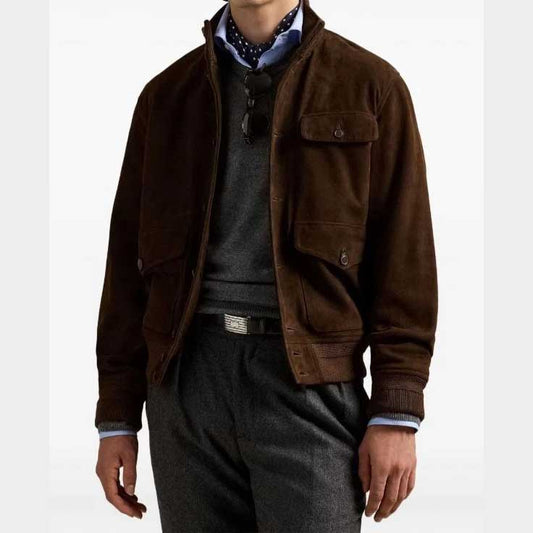
A suede jacket like this one needs a different routine from smooth leather, with a brush and protector spray instead of conditioner. Check each product page for the exact material and care needs.
Part 4: Storage Mistakes
Mistake 8: Thin or Wire Hangers
The damage: thin hangers dent the shoulders and stress the seams, and the distortion is very hard to correct, especially on heavy jackets.
What to do instead: use a wide, padded or contoured hanger that supports the full shoulder width.
Mistake 9: Storing in Plastic
The damage: plastic traps moisture, which can cause mildew and make leather sweat, stick, or discolor.
What to do instead: use a breathable cotton or canvas garment bag.
Mistake 10: Hot, Damp, or Bright Storage
The damage: attics and hot cars dry and crack leather, basements and garages encourage mildew, and sunlight fades and dries it.
What to do instead: store it in a cool, dry, dark, ventilated closet, away from heat sources and windows.
Mistake 11: Folding for Months
The damage: deep creases form, and leather can crack along the fold lines.
What to do instead: hang it. If you must fold, pad the folds with acid-free tissue, fold as few times as possible, and unfold it as soon as you can.
Mistake 20: Using Mothballs
The damage: mothballs leave a strong smell that is very hard to remove from leather, and they can leave residue.
What to do instead: clean the jacket before storage, and use cedar blocks or lavender sachets as deterrents, not touching the leather directly. This matters most for jackets with wool or shearling linings.
Part 5: Everyday Wear Mistakes
Mistake 14: Overstuffing Pockets and Using Heavy Bag Straps
The damage: heavy items stretch pockets and distort the shape, and a bag strap on the same shoulder every day rubs the finish and flattens the nap or wool.
What to do instead: carry less in the pockets, switch shoulders, or use a backpack, and be careful with seatbelts at the same contact points.
Mistake 15: Perfume, Hairspray, and Sunscreen
The damage: alcohol, oils, and some cosmetics can stain and dull the finish, and they build up on collars.
What to do instead: apply products before dressing and let them dry, keep sprays away from the jacket, and wear a scarf to protect the collar.
Mistake 16: Dye Transfer From New Denim
The damage: new dark denim can transfer dye onto light-colored leather, and some dark leather can rub onto light fabric.
What to do instead: test a new combination, avoid heavy friction at first, and wipe any transfer promptly.
Mistake: Skipping the Airing After Wear
The damage: sweat and moisture stay in the lining, causing odors and wear over time.
What to do instead: hang the jacket in a ventilated room after wearing, rather than putting it straight back in a crowded closet.
Mistake: Wearing It in Extreme Heat or Leaving It in a Hot Car
The damage: heat dries and cracks leather and can warp the shape.
What to do instead: carry it, and keep it out of cars in hot weather.
Part 6: Shearling-Specific Mistakes
If your jacket has a wool lining, a few extra mistakes apply.
- Never brushing the wool. It mats and flattens, especially at the collar and cuffs, so brush it gently every few weeks with a soft brush.
- Taking it to a standard dry cleaner. It can damage both the leather and the wool, so use a sheepskin specialist.
- Drying it near heat. It hardens and shrinks wool, so dry naturally.
- Skipping moth protection. Wool attracts pests, so store it clean, with cedar or lavender.
- Assuming the lining is real. Real and faux linings need different care, so read the product page. Our guide to the difference between genuine and faux shearling jackets shows how to tell.

A fully lined jacket like this classic B3 has wool through the body, sleeves, and collar, so it needs both leather care and wool care. Check the product page for the lining details.
Part 7: Buying and Fit Mistakes
Mistake 18: The Wrong Size
The damage: leather barely stretches, so a jacket that is too small strains the seams and cracks at the shoulders, elbows, and back, and one that is too large droops and rubs at the wrong places.
What to do instead: measure yourself and a jacket you own that fits well, compare with the size chart, prioritize the shoulders, and allow for your usual layers. Our complete leather jacket size chart guide walks through the method.
Mistake 19: Not Checking the Material
The damage: real leather, suede, shearling, and faux leather all need different care, and treating one like another causes damage. Faux leather can also crack or peel sooner than real leather.
What to do instead: read the product page and the care label, ask the seller if unclear, and for help decoding labels, see our guide to leather grades explained.
Mistake: Choosing a Jacket the Climate Cannot Support
The damage: a suede jacket in constant rain, or a heavy shearling jacket in mild weather, gets misused and wears out.
What to do instead: match the jacket to your weather, and keep a second, more weather-ready jacket for wet days.
Mistake: Ignoring Construction and Quality
The damage: thin, heavily coated leather and weak stitching wear out sooner, regardless of care.
What to do instead: look at the hide, grade, stitching, hardware, and lining before you buy. Our guide on what makes a genuine leather jacket last for years explains how these factors work together.
Part 8: Neglect Mistakes
Mistake 17: Ignoring Small Repairs
The damage: a loose seam, a loose button, a sticking zip, or a small tear grows over time, and by the time it is obvious, the repair is bigger and more expensive.
What to do instead: check seams, zips, snaps, and the lining at the start and end of each season, and repair problems early with a leather-experienced tailor.
Mistake: Forcing a Stuck Zipper
The damage: forcing it can bend or break the teeth, or tear the surrounding leather.
What to do instead: clean the teeth, use a zipper lubricant made for metal zippers while keeping it off the leather, and have it repaired if it still sticks.
Mistake: Never Checking a Stored Jacket
The damage: mildew, pests, and shoulder distortion can develop unnoticed.
What to do instead: check it every month or two during storage.
A Simple Routine That Prevents Most Mistakes
| When | Do this |
|---|---|
| After each wear | Hang it on a wide hanger and let it air |
| When dusty or after wet days | Wipe with a soft, slightly damp cloth, and dry naturally |
| Two or three times a year | Condition smooth leather in a thin layer, after a patch test |
| Start and end of season | Check seams, zips, snaps, and lining |
| Before storage | Clean, dry, hang, and cover in a breathable bag |
| Every month or two in storage | Check for odors, pests, and shoulder shape |
| When something looks wrong | Stop, and ask a professional |
When to Call a Professional
- Ink, dye transfer, or large stains.
- Heavy soiling, persistent odor, or mold.
- Cracks, peeling, or color loss.
- Valuable, vintage, or delicate jackets.
- Suede, shearling, or unusual finishes you are unsure about.
- Anything that goes wrong after a home treatment.
Look for a cleaner who works specifically with leather, suede, and shearling garments, and ask about their process. The returns and refunds policy is worth reading before you buy, so you can exchange a size that does not fit, and not force a jacket that never felt right.
Frequently Asked Questions
What is the biggest mistake that ruins a leather jacket?
Heat is among the worst, whether from drying near a heater or leaving the jacket in a hot car, along with storing it damp or in plastic.
How often should I condition a leather jacket?
Two or three times a year is typical for smooth leather, more in dry climates, and less if it feels soft and healthy.
Is it OK to wear a leather jacket in the rain?
Light drizzle is usually manageable, but leather is not waterproof. Avoid heavy rain, and blot and dry the jacket naturally if it gets wet.
Can I use olive oil or other kitchen oils on leather?
It is not recommended. Kitchen oils can darken leather and leave residue.
Why does my leather jacket feel stiff?
It may be dry, or it may have dried after getting wet. Clean it gently, condition it lightly, and wear it, since body warmth helps it soften.
Should I hang or fold my leather jacket?
Hang it on a wide, padded hanger. Folding creates creases and can crack the leather over time.
Does leather stretch if it is too small?
Slightly, but not enough to fix a poor fit, and forcing it strains the seams, so choose the right size.
Do I need to treat a new leather jacket?
Not usually, but a suede jacket benefits from a suede protector before the first wear, and every jacket benefits from knowing its care label.
How long should a leather jacket last?
It depends on the hide, construction, use, and care. A well-made, well-cared-for jacket can last many years, but there is no guaranteed number.
What if I have already made one of these mistakes?
Stop, assess the damage, and treat it gently. Light problems like dryness can often be improved, and a professional can help with stains, mildew, or cracks.
Small Habits, Long Life
Most leather jackets are not worn out by use but by avoidable habits. Dry it naturally, clean it gently, condition it sparingly, store it breathably on a wide hanger, fix small problems early, and choose the right size and material to begin with. Do that, and your jacket will be supple and good-looking for years. Orders from Shearling Jackets Store ship free worldwide.