

How to Clean and Condition a Leather Jacket at Home
To clean and condition a leather jacket at home, test your products on a hidden spot first, wipe the jacket with a soft cloth that is only slightly damp, use a gentle cleaner made for leather if it needs more than a wipe, let it dry naturally, and then apply a thin, even layer of a leather conditioner, buff it gently, and let it absorb. Do it a few times a year, not weekly, and never soak the jacket, machine wash it, or dry it near heat. The method below is for smooth, finished leather, which is what most leather jackets are, and it includes notes for suede, waxed leather, and shearling, which need different care. For schedules by leather type, our leather care and maintenance guide goes deeper, and this article walks you through the home routine step by step.
A note on caution: leather is natural, and every jacket has its own finish and dye. Always check the care label first, test any product in a hidden spot, and when in doubt, especially with stains, expensive jackets, or unusual finishes, ask a professional leather cleaner instead of experimenting.
The Short Answer: The Routine at a Glance
| Task | How often |
|---|---|
| Wipe with a soft, slightly damp cloth | When dusty, and after sweaty or wet wear |
| Deeper clean with a leather cleaner | Once or twice a year, or when visibly dirty |
| Condition | Two or three times a year, more in dry climates |
| Check seams, zips, and lining | Start and end of each season |
| Professional cleaning | For heavy soiling, stains, or valuable jackets |
Treat these as starting points. A jacket worn daily in a dry, dusty, or sweaty environment needs more care than one worn occasionally.
Before You Start: Know Your Leather
Different leathers need different care, and the wrong product can cause damage.
- Smooth finished leather (most jackets): the method in this guide applies.
- Suede and nubuck: a napped surface that needs a suede brush and eraser, and no conditioner or oils.
- Waxed or oil-treated leather: uses products made for that finish, and a gentle touch.
- Shearling-lined jackets: two materials, with wool that must be brushed and kept dry.
- Faux or coated leather: usually wiped clean and not conditioned, since the surface is plastic.
If you are not sure what you own, check the care label and the product page. Our guide to leather grades explained explains the labels you will see, and our guide to real leather versus faux leather shows how to tell the difference, since faux leather should not be conditioned.
What You Need
- Two or three soft, clean cloths, such as microfiber or soft cotton, with no abrasive texture.
- Lukewarm water and a clean bowl.
- A gentle cleaner made for leather, pH-balanced, if the jacket needs more than a wipe. A mild, leather-specific product is safer than household cleaners.
- A leather conditioner, preferably a cream-based product made for finished leather. Check that it suits your leather type.
- A soft brush, such as a horsehair or soft-bristle brush, for seams and stitching.
- A wide, padded hanger and a place to dry the jacket away from heat.
- A clean, dry towel for blotting.
Step 1: Do a Patch Test
Never skip this. Leather dye and finish vary, and a product that is fine on one jacket can stain or darken another.
- Choose a hidden area, such as the inside of a cuff, under the collar, or an inside seam.
- Apply a small amount of the cleaner or conditioner with a cloth.
- Wait until it dries fully, and check for darkening, spotting, stickiness, or color transfer onto the cloth.
- If anything looks wrong, do not use the product on the jacket.
Step 2: Prepare the Jacket
- Empty the pockets, and remove belts, pins, and removable linings or hoods.
- Close the zips and snaps to protect the hardware and keep the shape.
- Lay the jacket flat on a clean towel, or hang it on a wide, padded hanger.
- Brush off loose dust and dirt gently with a soft brush or a dry cloth, paying attention to seams and creases.
Step 3: Clean the Jacket
The Basic Wipe (For Light Dirt)
- Dampen a soft cloth with lukewarm water, then wring it out until it is only slightly damp.
- Wipe the jacket in gentle, even strokes, working one section at a time, with the grain.
- Follow with a clean, dry cloth to remove moisture.
- Let the jacket air dry.
For many jackets, regular wiping is all the cleaning they need.
The Deeper Clean (For Visible Dirt or Grime)
- Apply a small amount of a gentle leather cleaner to a damp cloth, not directly onto the jacket.
- Work in small sections with light, circular or straight strokes, without rubbing hard.
- Pay extra attention to the collar, cuffs, and hem, where oils and dirt build up.
- Wipe away residue with a clean, slightly damp cloth.
- Blot dry with a dry cloth, and let the jacket air dry fully.
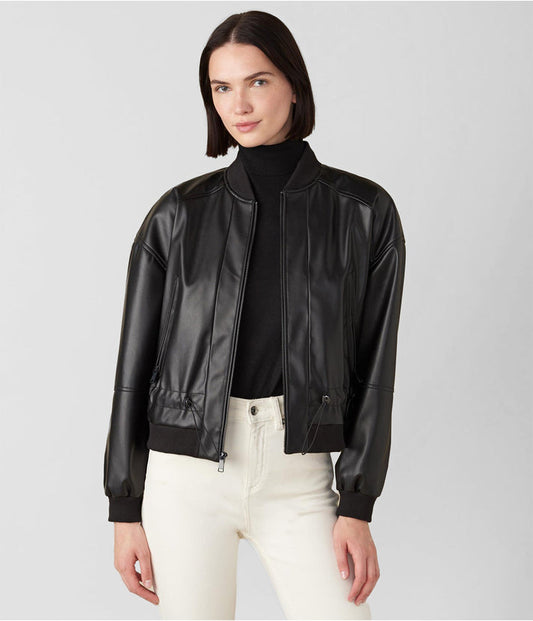
A smooth black leather jacket like this one is the kind of finish this method suits, and dark leather is also where residue shows most, so wipe cleaner off thoroughly. Check each product page for the specific leather and care details.
Cleaning Tips
- Use as little water as possible, since too much can cause water spots and stiffness.
- Clean the whole panel, from seam to seam, so you do not leave a visible patch.
- Use a clean section of the cloth often, so you are not rubbing dirt back in.
- Avoid scrubbing, which can damage the finish.
Step 4: Let It Dry Properly
Drying is where many jackets are damaged.
- Hang the jacket on a wide, padded hanger in a well-ventilated room.
- Keep it away from radiators, heaters, hair dryers, and direct sun. Heat can stiffen leather and cause it to crack.
- Be patient. Let it dry fully, which can take several hours or longer.
- Do not fold or store it while it is damp.
Step 5: Condition the Leather
Leather is skin, and it dries out without oils. Conditioning keeps it supple and helps prevent cracking. Wait until the jacket is completely dry from cleaning.
- Use a small amount of conditioner on a clean, soft cloth. Less is more.
- Rub it in gently with thin, even strokes or small circles, working with the grain, one section at a time.
- Pay extra attention to areas that flex, such as elbows, cuffs, and the collar, and to dry-looking patches.
- Avoid hardware, zips, and linings, and wipe off any excess.
- Let the conditioner absorb, following the product's directions, often for several hours or overnight.
- Buff lightly with a clean, dry cloth to remove residue and restore a soft sheen.
Conditioning Tips
- Thin layers are better than one thick layer, since too much conditioner can darken the leather, make it feel greasy, or leave a sticky surface.
- If the leather feels soft and looks healthy, it may not need conditioning yet.
- Do not condition faux leather or suede.
- If the jacket darkens in the patch test, choose a different product, or ask a professional.
How Often to Clean and Condition
| Situation | Wipe | Condition |
|---|---|---|
| Worn occasionally, dry climate | When dusty | Twice a year |
| Worn often, moderate climate | Monthly, or after heavy wear | Two or three times a year |
| Worn daily, humid or sweaty conditions | Weekly or after wear | Three or four times a year, if it feels dry |
| Very dry climate or heated rooms | When dusty | Possibly more often, if the leather feels dry |
These are starting points. Let the leather's condition guide you: if it feels dry, stiff, or looks dull, it may need conditioning, and if it feels tacky or greasy, you have used too much.
Stain Guide
Act quickly, start gentle, and stop if you are unsure. Each new product can make a stain harder to remove.
| Stain | What to do |
|---|---|
| Water spots | Blot gently, then dampen the whole panel evenly with a barely damp cloth and let it dry naturally, so no ring forms |
| Dust and dirt | Brush off, then wipe with a slightly damp cloth |
| Mud | Let it dry, brush off the dried dirt, then wipe gently |
| Fresh grease or oil | Blot, do not rub. Some people sprinkle an absorbent powder such as cornstarch and leave it for several hours before brushing it off, but test first, and see a professional if it persists |
| Ink, dye, makeup | Blot only, and take it to a leather professional, since home treatments can spread or set it |
| Drinks and food | Blot immediately, then wipe with a barely damp cloth |
| Road salt | Wipe with a cloth dampened with clean water, then blot dry, since salt dries out leather |
| Scuffs and light scratches | Rub gently with a clean finger or soft cloth, since body warmth and natural oils can help, then condition |
| Mold or mildew | Wipe the surface gently with a barely damp cloth, dry the jacket in a ventilated place, and see a professional if it is widespread or returns |
Odors
- Air the jacket in a ventilated space, away from direct sun and heat.
- Wipe the lining with a barely damp cloth if the fabric allows it, and let it dry.
- Avoid spraying perfume, deodorizer, or strong cleaners on the leather.
- For persistent odors, a professional can treat the jacket.
What Not to Do
- Do not machine wash or tumble dry a leather jacket. It can shrink, stiffen, and ruin the finish.
- Do not dry it near heat, such as a radiator, heater, hair dryer, or direct sun.
- Do not use household cleaners, bleach, alcohol, or harsh detergents. They can strip oils and cause cracking or discoloration.
- Do not rely on internet hacks such as cooking oils, vinegar mixes, or baby wipes. Some can leave residue, darken the leather, or damage the finish.
- Do not soak the jacket. Too much water causes spots and stiffness.
- Do not scrub hard, which can wear the finish.
- Do not over-condition. Too much product leaves a greasy, sticky surface.
- Do not skip the patch test.
- Do not store it damp, which can cause mildew.
Special Cases
Suede and Nubuck
Use a suede brush to lift the nap and remove dust, and a suede eraser for light marks. Do not use leather conditioner, oils, or much water. A suede protector spray, tested on a hidden area first, helps repel moisture. For stains, see a suede specialist.
Waxed or Oil-Treated Leather
Waxed finishes have a rugged, worn-in look, and some creasing and marks are part of the character. Wipe gently, and use products made for that finish if it needs treatment, since regular conditioners may not suit it.
Shearling-Lined Jackets
The wool lining should be brushed gently every few weeks, kept dry, and cleaned only by spot treatment at home. Do not machine wash it, and use a sheepskin specialist for deep cleaning. Keep conditioner off the wool.
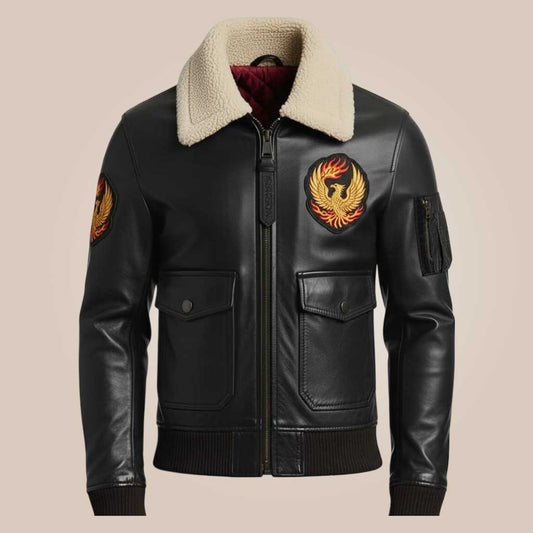
A leather flight jacket like this one is a good example of a smooth finish where this routine applies, while the collar and cuffs deserve extra attention. Check each product page for the specific materials, since jackets of similar style can differ in lining and finish.
Faux or Coated Leather
Wipe with a slightly damp cloth and follow the care label. Do not use leather conditioner, which cannot absorb into a plastic coating.
Restoring a Dry or Stiff Jacket
If a jacket feels dry or stiff:
- Clean it gently first, so you are not sealing dirt into the leather.
- Apply a thin layer of conditioner, and let it absorb fully.
- Repeat in a day or two if it still feels dry, rather than applying a thick coat.
- Wear it, since body warmth and movement help leather soften.
- If cracks have formed, see a professional, since conditioner can soften leather but cannot repair broken fibers.
Protecting the Jacket Between Cleanings
- Hang it on a wide, padded hanger, and avoid hooks and thin hangers that distort the shoulders.
- Store it in a breathable garment bag, not plastic, which traps moisture.
- Keep it out of direct sun, which fades and dries leather.
- Avoid hot cars, humid basements, and damp closets.
- Be mindful of friction, such as bag straps on one shoulder, which wear the finish.
- Be careful with new dark denim, which can transfer dye onto light leather.
- Let it breathe after wearing, rather than putting it straight back in the closet.
When to Call a Professional
- Ink, dye transfer, or large stains.
- Heavy soiling, persistent odor, or mold.
- Cracks, peeling, or color loss.
- Valuable, vintage, or delicate jackets.
- Suede, shearling, or unusual finishes you are unsure about.
- Anything that goes wrong during a patch test.
Look for a cleaner who works specifically with leather and suede garments, and ask about their experience and process. You can also contact the seller of your jacket for care advice, and the Learn Everything Leather page is a useful reference for the basics.
How Care Affects Longevity
A well-made leather jacket can last many years, and care is one of the biggest factors you control, along with the quality of the hide and the construction. There is no guaranteed lifespan, but regular, gentle care helps. Our guide on what makes a genuine leather jacket last for years explains how grade, stitching, hardware, and care work together.
Common Mistakes
- Cleaning too often, or using too much water.
- Conditioning too often, or applying too much.
- Skipping the patch test.
- Drying it with heat.
- Using the wrong product for suede or faux leather.
- Ignoring small problems until they grow.
- Storing it in plastic.
Home Care Checklist
Before you begin, confirm:
- You have checked the care label, and know your leather type.
- You have soft cloths, a gentle leather cleaner, and a suitable conditioner.
- You have done a patch test on a hidden area.
- You have a place to dry the jacket away from heat.
- You are willing to use thin layers and take your time.
Buying Leather That Is Easy to Look After
Care is easier when the jacket is well made, so check the material before you buy. You can browse smooth-finished styles in the men's leather jackets and women's leather jackets collections, and read each product page for the leather type, finish, and lining, since collections can include real leather, suede, and faux options. Confirm the exchange terms in the returns and refunds policy before you order.
Frequently Asked Questions
How often should I condition a leather jacket?
Two or three times a year is typical for smooth leather, more in dry climates, and less if the leather feels soft and healthy.
Can I clean a leather jacket with soap and water?
A slightly damp cloth with plain water is fine for light cleaning. For deeper cleaning, use a gentle cleaner made for leather, and avoid regular soaps and household cleaners.
Can I put a leather jacket in the washing machine?
No. It can shrink, stiffen, and ruin the finish.
What do I use to condition a leather jacket?
A cream-based conditioner made for finished leather, applied in thin layers, after testing on a hidden spot.
Can I use olive oil or other kitchen oils on leather?
It is not recommended. Kitchen oils can darken leather, leave residue, and turn rancid.
How do I dry a wet leather jacket?
Blot it, hang it on a wide, padded hanger, and let it dry naturally at room temperature, away from heat.
How do I remove a stain from a leather jacket?
Blot gently, start with a barely damp cloth, and see a professional for ink, grease, or stubborn stains.
Can I condition a suede jacket?
No. Use a suede brush, eraser, and protector spray instead.
How do I know if my jacket needs conditioning?
If it feels dry or stiff, or looks dull or shows fine cracks, it likely does. If it feels soft and supple, it can wait.
Can conditioning fix cracked leather?
It can soften leather and slow further drying, but it cannot repair broken fibers, so see a professional for cracks.
Gentle, Regular, and Patient Beats Aggressive
Leather is forgiving when it is treated gently: a regular wipe, an occasional deeper clean, careful conditioning in thin layers, natural drying, and sensible storage. Test first, avoid shortcuts, and know when to hand a stain or a valuable jacket to a professional. Do that, and your leather jacket will stay supple and look better with age. Orders from Shearling Jackets Store ship free worldwide.